Log Reduction

AN INTRODUCTION TO ADVANCED DISINFECTING

What is Log Reduction?

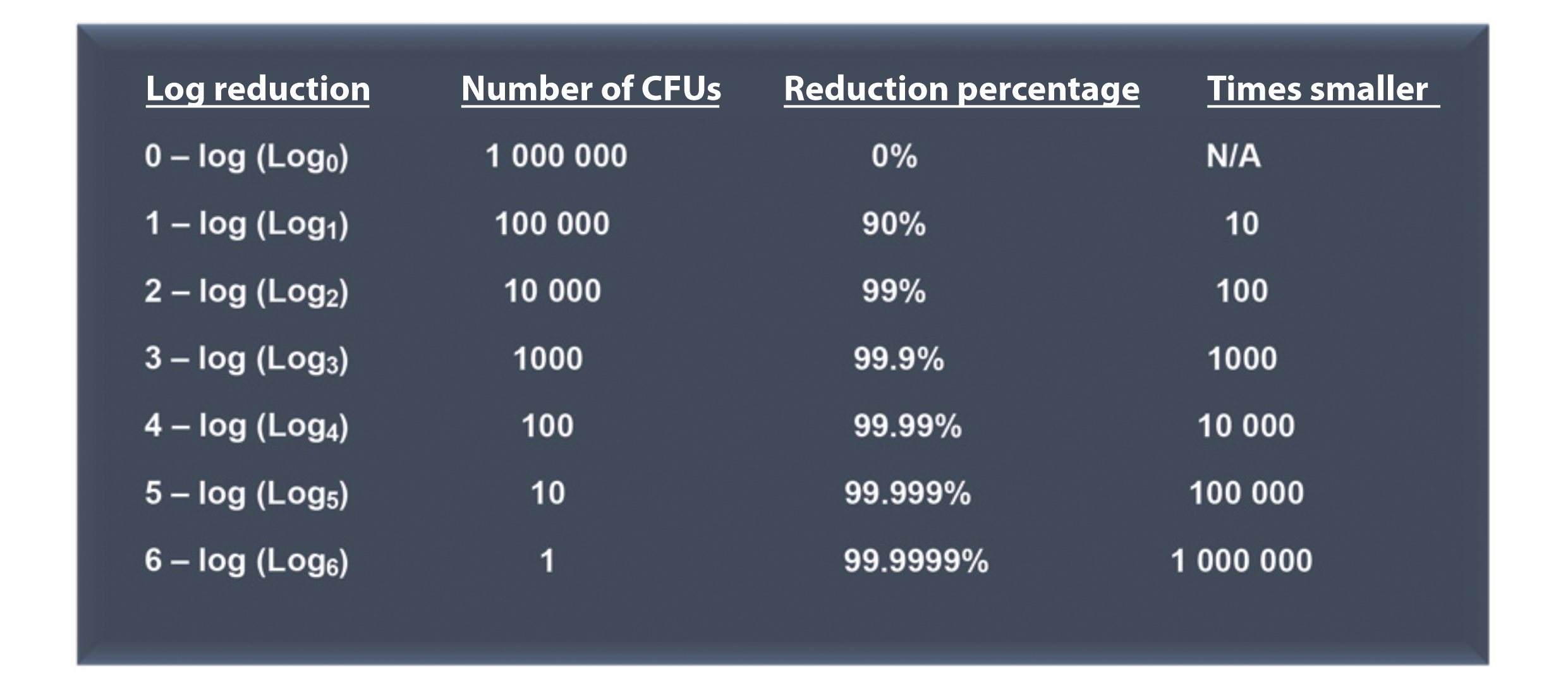
In infection control, Log Reduction is a scientific way of expressing how effective a product or process is at eliminating pathogens such as bacteria, viruses, or fungi. The term “log” refers to a logarithmic scale, which measures reductions in multiples of ten. Each step on the log scale represents a tenfold (or 90%) reduction in the number of microorganisms.

For example:

  • 1 Log Reduction means the number of microbes is reduced by 90% (from 1,000,000 down to 100,000).

  • 2 Log Reduction means a 99% reduction (1,000,000 down to 10,000).

  • 3 Log Reduction means a 99.9% reduction (1,000,000 down to 1,000).

  • 6 Log Reduction means a 99.9999% reduction (1,000,000 down to just 1).

This scale is important because even very small numbers of harmful pathogens can cause illness or spread infection. A product with a higher log reduction has proven to be much more effective at minimising that risk.

Sterilisation versus Disinfection
  • Sterilisation

    • Kills all microorganisms, including highly resistant bacterial spores.

    • Considered an absolute state — something is either sterile or it isn’t.

    • Common methods: autoclaving (steam under pressure), chemical sterilants, or radiation.

    • Used for critical items like surgical instruments, implants, or lab equipment.

  • Disinfection

    • Eliminates or reduces most pathogenic microorganisms but does not reliably destroy spores.

    • Not absolute — it lowers microbial levels to make environments and equipment safe for use.

    • Methods include chemical disinfectants (e.g., chlorine, alcohol, quaternary ammonium compounds).

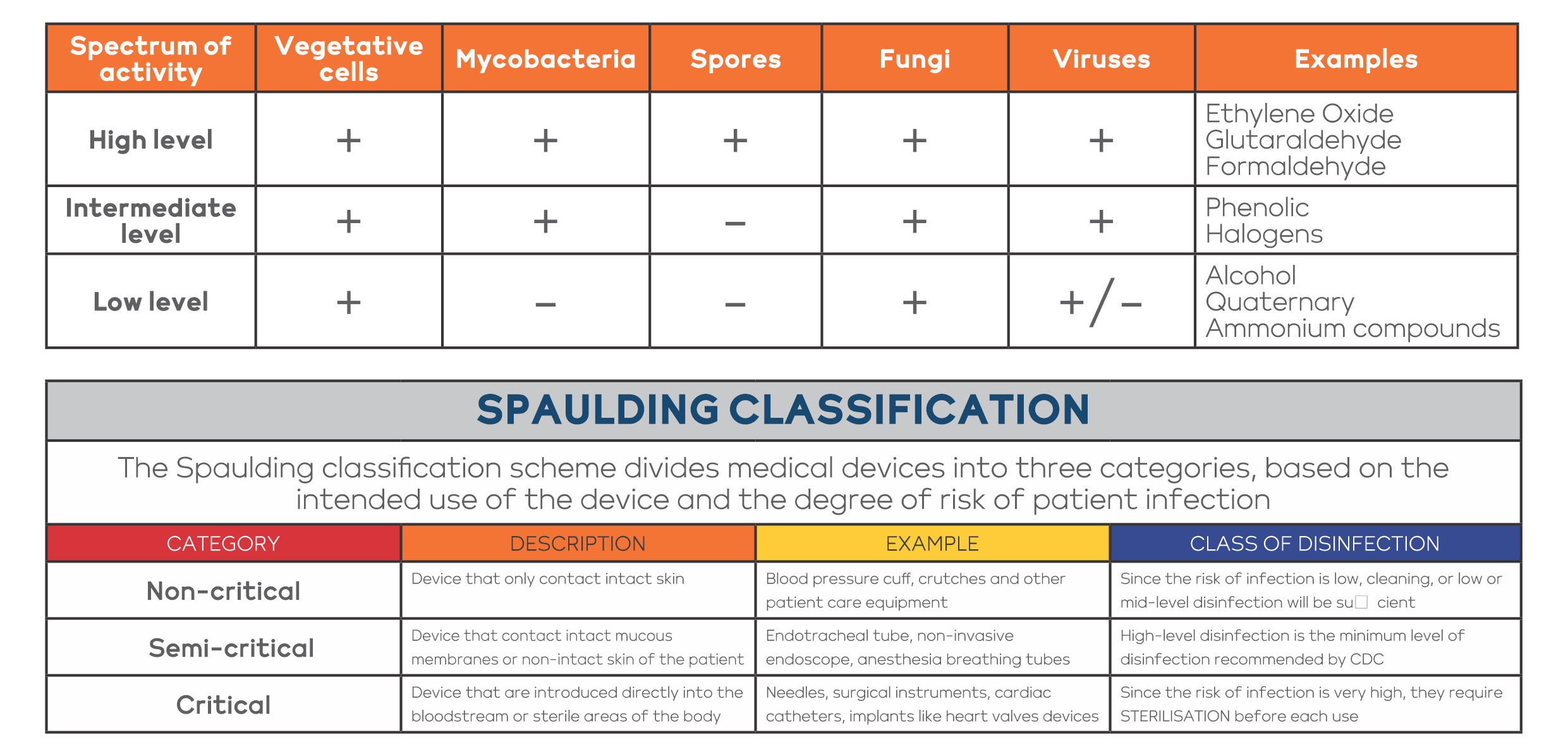
    • Levels vary: high-level (kills most organisms), intermediate or low-level (kills many but not spores).

Key takeaway:

  • Sterilisation = total destruction of all microbes.

  • Disinfection = significant reduction, but not complete elimination.

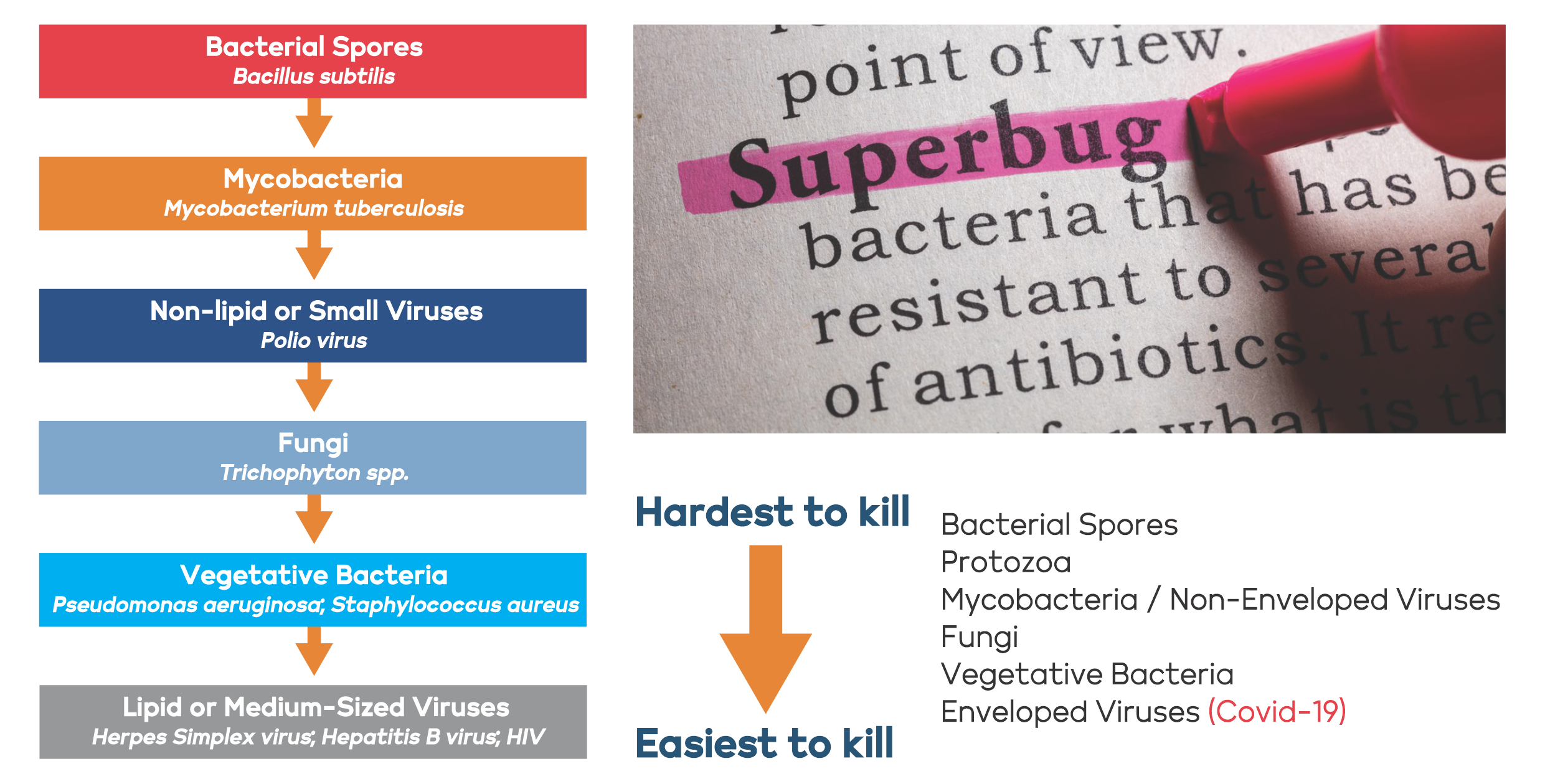
Hierarchy of Microbial Risk

Click to download our Log Reduction brochure (PDF)